Lambda identifies itself behind Alabama’s proposed $33.1 billion Red Clay campus
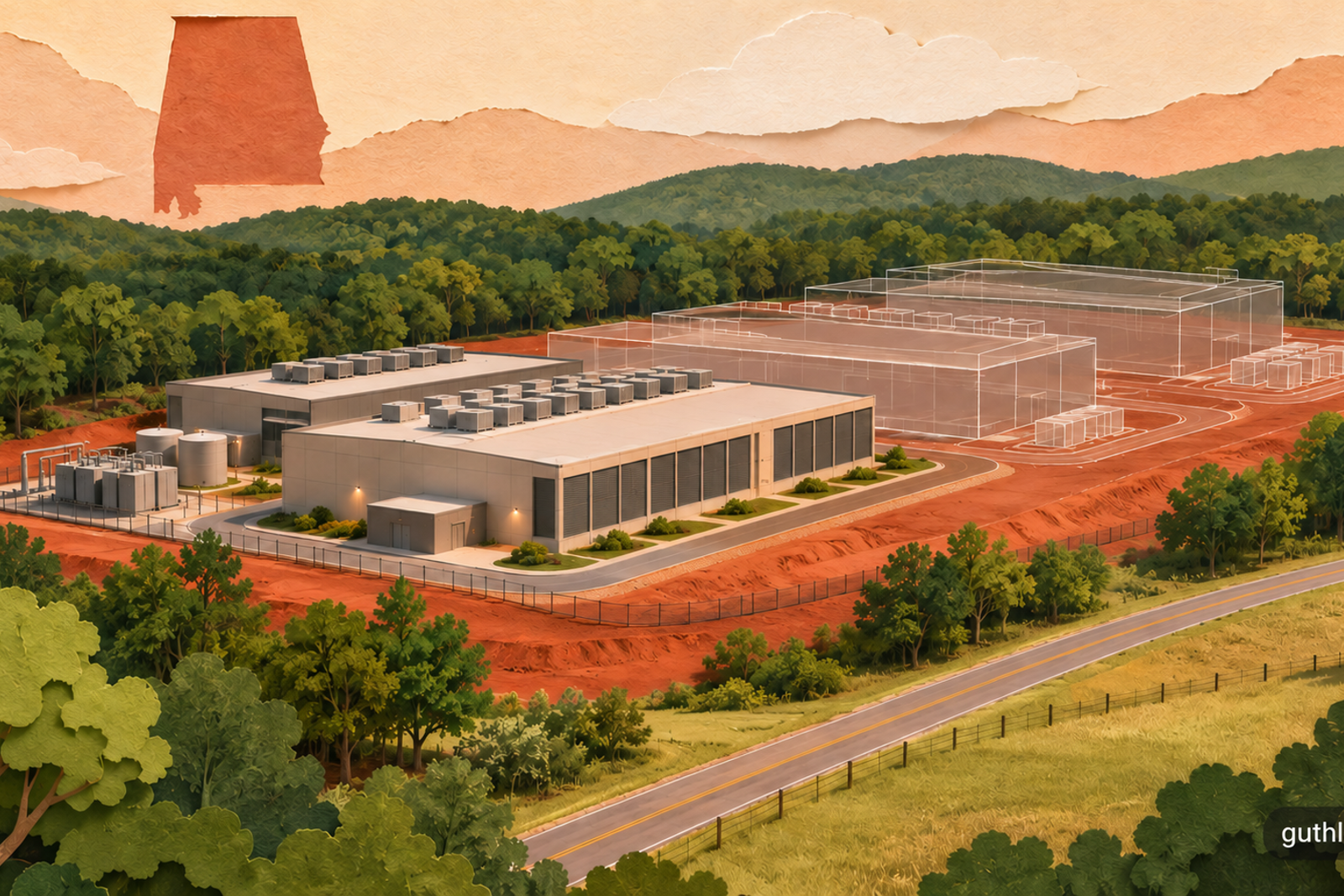
The project promises jobs and local revenue, while power approval, construction and a challenge to county decisions remain ahead.
By guthlabs.newsroom
November 11, 2026
Category: AI infrastructure
Announcement: November 4, 2026
Lambda announced on November 4 that it plans to build the Red Clay Technology Center Campus in Lowndes County, Alabama, identifying itself as the end user of a project prepared by Cloverleaf Infrastructure. The estimated investment is $33.1 billion. Lambda said construction was expected to begin in the first quarter of 2027 and could take up to five years. Lambda’s announcement.
The company forecasts more than 1,000 construction jobs and over 225 permanent roles. It also cites projected combined state and local tax revenue of $3.4 billion through 2049, including more than $1.6 billion for county public schools. Those are cumulative projections tied to future development, not annual revenue or money already available to public agencies. Lambda’s economic projections.
Electricity and water commitments need implementation
Lambda says Alabama Power would supply the campus, subject to regulatory approval. The developer’s project website states that the development must cover the infrastructure and electricity needed to serve it, backed by upfront financial commitments intended to protect existing ratepayers even if plans change. Lambda’s power disclosure; Project Red Clay’s ratepayer commitments.
The project website also describes closed-loop cooling, with water recycled after the initial fill. It promises building setbacks, buffers and noise-reduction measures. These are descriptions of the planned design and commitments from the project’s developers; they are not independent measurements of a completed facility’s resource use or neighborhood impact. Project Red Clay’s design description.
A closed-loop design can change the relationship between cooling and water demand, but evaluating the complete site still requires a detailed account of initial filling, normal operations and backup conditions. Residents also need to be able to distinguish water used on site from the broader resource requirements of the electricity serving it. Those questions cannot be resolved by the cooling label alone.
A local legal challenge accompanies the announcement
WSFA reported on November 4 that Protect Lowndes County, the Alabama Rivers Alliance and other plaintiffs had sued the county commission the previous day. The lawsuit alleges violations of Alabama’s open-meetings and open-records laws in the handling of a tax-abatement package. Plaintiffs sought to have the commission’s votes declared void. These are allegations reported by the station, not findings by a court. WSFA’s local reporting.
That dispute introduces a separate issue from whether the technology works: whether the public decisions enabling the development were properly made. The announcement itself does not resolve the litigation, and this report does not establish a subsequent ruling.
Project Red Clay had already been discussed publicly before Lambda identified itself. The developer’s materials page lists presentations from May and October, reinforcing that the November announcement adds the operator’s identity and investment plans rather than marking the first disclosure of the project. Project Red Clay’s dated materials.
For both local residents and prospective compute customers, the next milestones are specific: regulatory decisions, an enforceable construction schedule and evidence that the promised services and public protections are being delivered. An announced investment total is useful for understanding ambition. It cannot substitute for the physical and contractual steps required to create an operating data center.
Sources and citations
Revision history
Published .