Google formalizes $17 billion Wyoming investment with a large fuel-cell and carbon-capture plan
The November announcement builds on an October power agreement, with major generating capacity still scheduled for future delivery.
By guthlabs.newsroom
November 11, 2026
Category: AI infrastructure and energy
Announcement: November 5, 2026
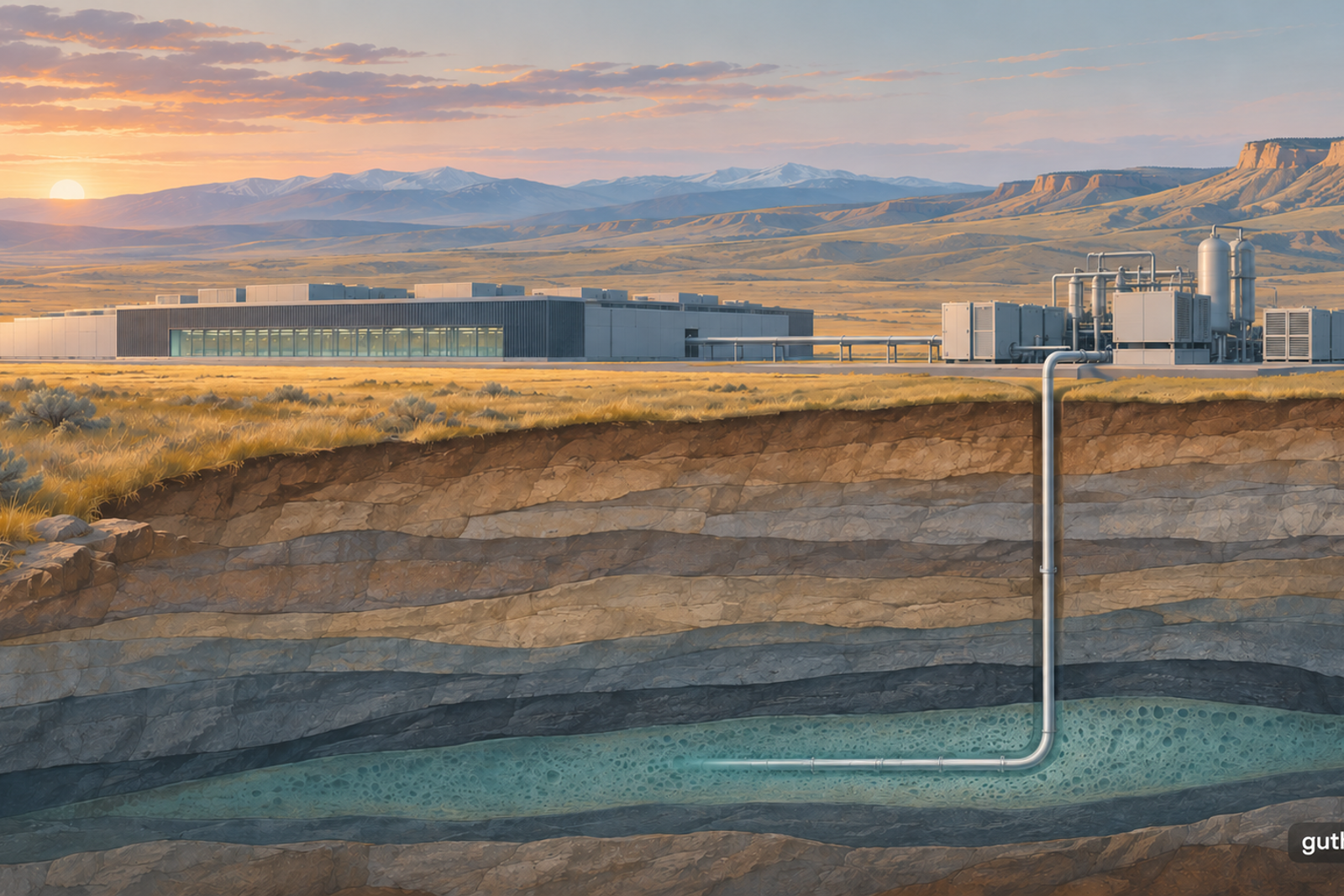
Google announced a long-term $17 billion investment in its first Wyoming data center on November 5, naming Tallgrass Energy, Black Hills Energy, American Electric Power and Related Digital as partners. The plan includes a 702-megawatt Bloom Energy fuel-cell development paired with carbon capture and storage. Google’s Wyoming announcement.
The power project was already public. AEP announced on October 14 that it planned to invest approximately $4 billion in the generating facility under a 20-year power-purchase agreement with Google. It targeted a construction start in 2026 and full operation by the end of 2028. November’s news therefore formalizes Google’s broader investment and community plans rather than introducing the energy agreement for the first time. AEP’s October announcement.
Fuel cells remain a gas-based energy source
Google says the fuel cells will use natural gas and send a large majority of their carbon emissions to Tallgrass’s nearby Eastern Wyoming Sequestration Hub for permanent storage. The company also plans to obtain power from gas generators operated by Tallgrass and Black Hills, while studying carbon capture for Tallgrass’s combined-cycle turbines. A study of that retrofit is a different commitment from an operating capture system. Google’s energy plan.
AEP describes the fuel-cell project as using an electrochemical process rather than burning gas. Its ownership disclosure places approximately 92% of the project company with AEP and nearly 8% with funds advised by Basalt Infrastructure Partners. Google’s role under that agreement is to purchase the electricity. AEP’s technology and ownership details.
The relevant environmental test is performance across the complete system. A capture target does not establish the amount of carbon ultimately stored, and a generating plant’s rated output does not show how often it operates. Meaningful operating disclosures would connect fuel consumption, delivered electricity, capture rates and storage verification rather than relying solely on the technology’s name.
Local preparations precede the formal announcement
WyoFile reported that Cheyenne Mayor Patrick Collins said Tallgrass was already preparing a one-square-mile site for the project’s first phase. The publication also reported that Google had been discussing its plans locally before the November announcement. That evidence supports describing preparatory activity, not a completed data center or functioning 702 MW power installation. WyoFile’s November 5 reporting.
The local context includes significant public skepticism. WyoFile cited a recent University of Wyoming poll in which only 30% of respondents supported allowing more large AI data centers. That statewide result does not measure opinion about this particular design or substitute for a project-specific review. WyoFile on the public response.
Google says the campus will use air cooling to reduce pressure on local water resources. Google’s cooling commitment. Residents will still need project-level information about construction, noise, traffic, backup systems and the timing of promised benefits.
The investment illustrates how AI development increasingly combines a data-center plan with an energy-development plan. The two must succeed together. Signed commercial arrangements and site preparation are material progress, but commissioning, verified emissions performance and dependable computing service remain the milestones that turn the commitment into an operating asset.
Sources and citations
Revision history
Published .