SpaceX-linked Arizona AI campus faces power and land-use reviews before its proposed 6 GW buildout
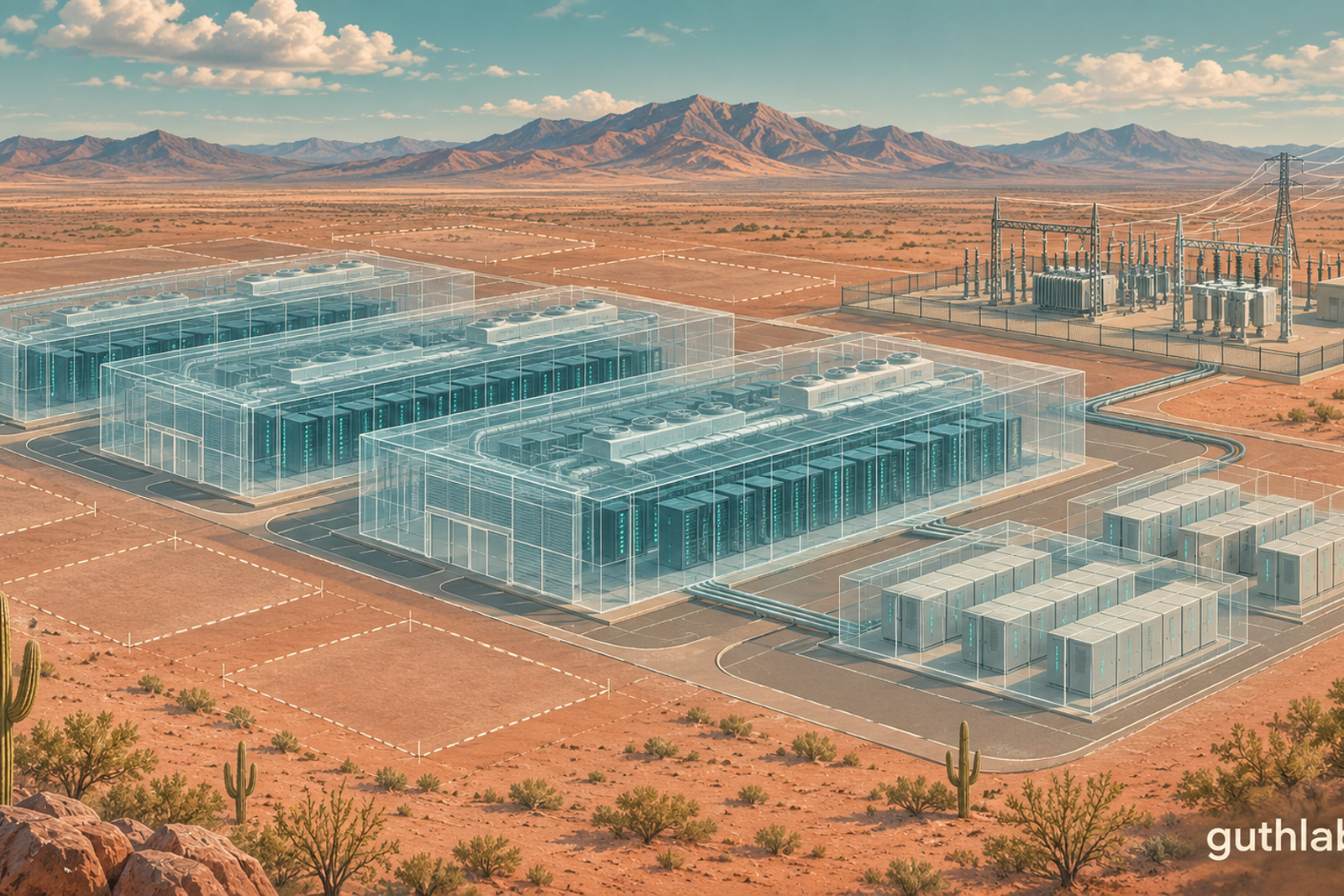
Cochise County has received an application, while the local electric cooperative says a service agreement remains under negotiation.
By guthlabs.newsroom
November 11, 2026
Category: Data centers and energy
Developments: November 4–9, 2026
A proposed AI campus near Cochise, Arizona, has entered public review with a projected electrical demand of 6 gigawatts at full development. County records describe approximately 747 acres, up to nine computing buildings and four construction phases. They also explicitly say the applicant's figures have not been independently verified or endorsed by the county. Cochise County's project page, updated November 9.
Data Center Dynamics identified applicant Tombstone Resources LLC as an affiliate of SpaceXAI in its November 6 report. The publication said the plans include a 24-gigawatt-hour battery system and a potential March 2027 construction start, conditional on zoning approval. Those figures describe the developer's intentions, not operating infrastructure. Data Center Dynamics' reporting.
The distinction matters because the project's headline capacity is an eventual electricity requirement. It does not establish that the developer has secured every approval, installed the computing equipment or arranged delivery of that much power.
The electricity contract is still being negotiated
Sulphur Springs Valley Electric Cooperative, which would supply distribution service, says no agreement has been finalized. An Energy Services Agreement would require approval from the Arizona Corporation Commission. Its project FAQ describes a first phase totaling 1.5 GW, developed in stages, with engineering studies and necessary system improvements required before each stage receives service. SSVEC's project explanation.
SSVEC says it is negotiating protections for existing members if the project closes early or uses less electricity than anticipated. Possible provisions include deposits, financial guarantees and minimum payments. It also says the developer would pay the costs of serving the new load. These are negotiating positions and proposed protections, not a final approved allocation of costs. SSVEC's explanation of financial protections.
That contract is central to the project's economics. A utility can face costs well before a customer reaches its expected demand. The meaningful test is therefore not simply who promises to pay for construction, but what enforceable obligations remain if the load arrives late, falls short or disappears.
Public review has its own timetable
An applicant-hosted meeting took place November 4. The county's formal Planning and Zoning Commission hearing is scheduled for December 9 at 2 p.m. The commission may approve the application, impose conditions or deny it. Even a favorable land-use decision would not replace the other permits and agency approvals required for construction and operation. The county's current hearing and approval information.
The two processes should not be collapsed into one milestone. Land-use permission concerns whether and under what conditions the proposed development can occupy the site. Electricity arrangements concern the infrastructure, service and financial commitments needed to support it. Progress on either does not automatically complete the other.
For now, the strongest evidence of advancement is the public application and the start of community scrutiny. The decisive next documents will be the county's findings and any finalized power agreement. Until then, 6 GW remains a proposed full-buildout demand rather than a new addition to available AI computing capacity.
Sources and citations
Revision history
Published .