Amsterdam data-center protest puts local impacts of AI construction under scrutiny
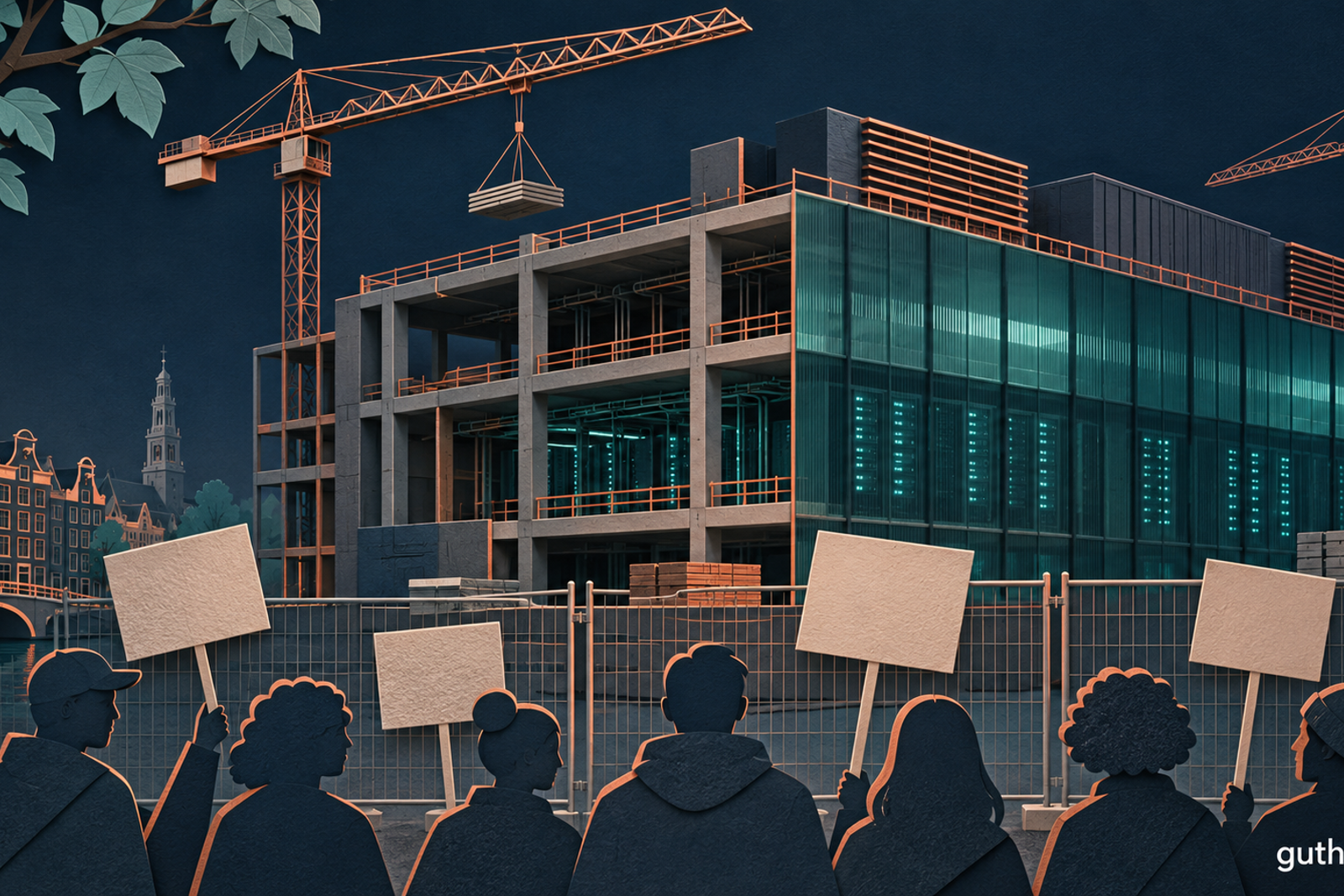
Protesters entered the construction site of a data center intended for Microsoft in Amsterdam on November 6, with some climbing cranes, Reuters reported. The action formed part of wider demonstrations against the pace and environmental effects of data-center expansion. This was an incident at a physical construction site, not a reported intrusion into an operating computer network. Reuters' account, republished by StreetInsider.
The Associated Press initially reported a police estimate of between 150 and 200 people detained on suspicion of trespassing. On November 7, NH Nieuws reported that the total was 218 and all had been released, citing a police spokesperson's account to the ANP news agency. Detention does not establish a conviction, and release does not by itself resolve any allegations. AP's initial report; NH Nieuws's updated police account.
Reuters said site owner Pure Data Centres asked demonstrators to leave safely and engage in dialogue. Microsoft told Reuters it respected peaceful expression while not condoning unlawful actions. Those responses distinguish the right to protest from the safety and legal questions raised by entering a construction area. The companies' responses reported by Reuters.
A campaign focused on development rules
The Stop Dirty Data Centres coalition called for an immediate moratorium on large data-center development in Europe. Its website describes the proposed pause as a way to address social and environmental concerns and allow debate over where facilities should be built and under what conditions. Its November 6–7 program included different forms of local action, not one uniform tactic. The coalition's stated aims and program.
That is an advocacy position rather than a government decision. The demonstrations do not themselves suspend construction permits, establish environmental violations or determine which projects can proceed.
The developer's case is also site-specific
In a November 6 statement, Pure DC described its 78 MW AMS01 project in Westpoort as a development on industrial brownfield land with investment exceeding €1 billion. It forecast a peak construction workforce of 1,100 in 2027 and more than 80 permanent roles afterward. These are the developer's projections, not jobs independently counted by Guth News. Pure DC's project statement.
The company said the campus would use non-potable water from the port's industrial supply and was designed to export waste heat. It described heat-exchange design work as underway and discussions with the local heating-network operator as continuing. A design capable of exporting heat is therefore not the same as an operating system already delivering it to homes. Pure DC's water and heat disclosures.
Construction claims need operating evidence
The dispute brings together questions that cannot be settled by a single investment figure: local power availability, water sources, noise, employment and the conditions attached to development. Each has its own evidence, and an improvement in one area does not automatically answer concerns in another.
For residents, useful follow-through would mean accessible permit conditions and comparable measurements as the facility develops. For the companies, published forecasts create benchmarks against which later performance can be assessed.
The Amsterdam incident shows that AI infrastructure faces public scrutiny well before servers begin running. The substantive question beyond the confrontation is how local costs, benefits and safeguards will be demonstrated over the project's life.
Sources and citations
Revision history
Published .