AutoDNA connects AI planning with a laboratory's physical experiments
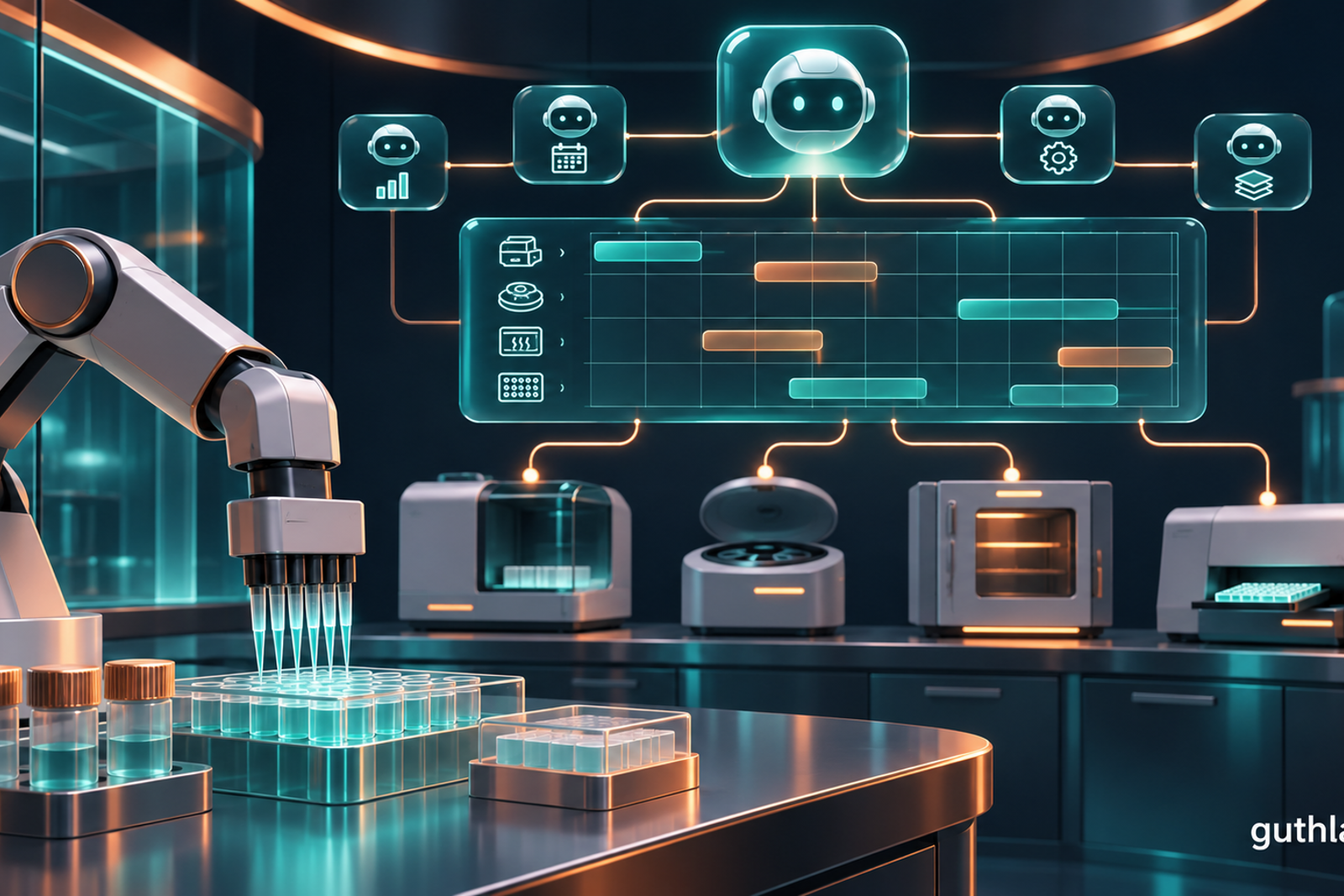
Researchers at Shanghai Jiao Tong University and collaborating institutions have described an experimental laboratory in which AI agents coordinate molecular-biology work across many instruments. AutoDNA, reported in Nature on November 4, moves beyond generating suggested procedures by connecting software planning to physical laboratory operations.
The researchers report coordination of more than 20 types of instrument across more than 11,000 steps, covering operations including DNA synthesis, amplification and sequencing. Human work remained necessary for hardware maintenance and replenishing supplies. The result is a research demonstration of coordinated automation, with continuing support requirements, rather than evidence of a laboratory that never needs people.
A November 6 university explanation describes how the system divides work among specialized agents. Their responsibilities span literature review, reagent selection, experimental planning, code generation, execution and analysis. Results can inform subsequent revisions to a plan.
The university says a common software interface represents what different instruments can do. That lets the system combine equipment capabilities without treating every device as a completely separate programming problem. A scheduling layer tracks equipment and coordinates timing, while the physical apparatus provides the precision needed for handling small liquid volumes.
This architecture matters because a convincing written procedure is only one part of an experiment. The equipment must be available, the operations must happen in an appropriate order, and the system must preserve the connection between the intended procedure and the measurements it obtains. AutoDNA makes that integration a central engineering problem.
In Nature's separate news report, chemical engineer Milad Abolhasani of North Carolina State University highlighted the system's autonomy and ability to incorporate varied equipment. That outside assessment concerns the platform's design; it does not establish that every future experiment will work.
The research also comes with materials that other laboratories can inspect. The paper links supporting data and code, and the public AutoDNA repository separates the user interface, AI components, scheduling software and equipment-control firmware. Its documentation explicitly warns that complete reproduction is not guaranteed without the necessary hardware. A downloadable repository does not make a specialized laboratory immediately available on an ordinary computer.
For institutions considering similar systems, the practical questions include reproducibility, maintenance, instrument compatibility and how failed operations are detected. Those are questions to test during deployment, not benefits that can be assumed from the publication alone. Cost savings and staffing effects would also need evidence from actual use.
The paper provides a concrete example of AI coordinating work in the physical world. Its strongest implication is that experimental planning and laboratory execution can be designed together. Establishing reliability across other laboratories, equipment configurations and research problems will determine how far that approach travels.
Sources and citations
Revision history
Published .