NVIDIA introduces GR00T 2, with robot-learning code still due in December
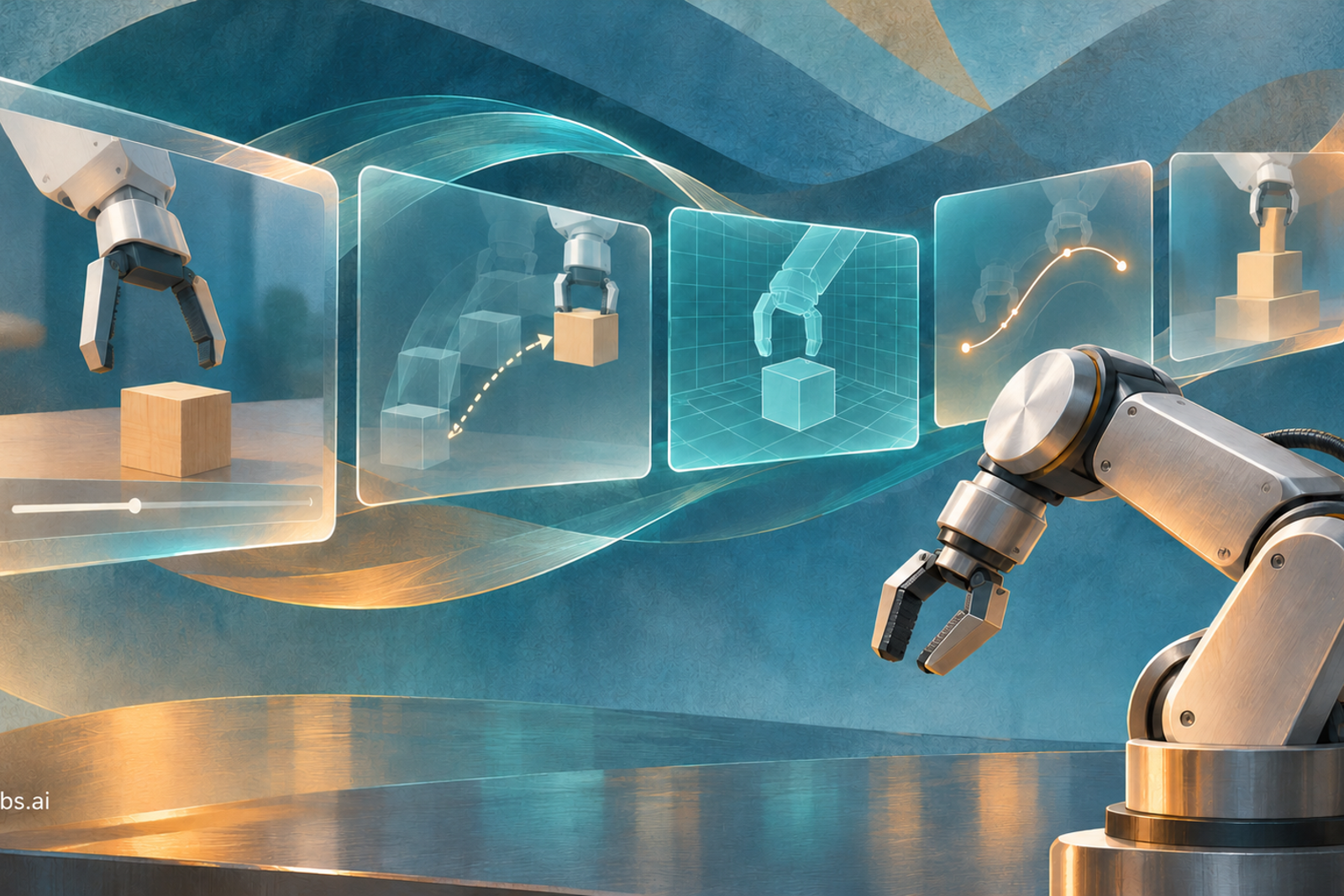
NVIDIA introduced GR00T 2 at the Conference on Robot Learning on November 9, pairing a new robot model with a wider push into simulation and industrial evaluation. The announcement describes GR00T 2 as an open world-action model built on Cosmos. Developers planning an immediate implementation should note that its research page lists code availability for December.
The release puts the emphasis on teaching robots new physical skills with less task-specific data. That is a useful direction for teams whose bottleneck is collecting demonstrations for every object, workstation or robot configuration.
Predicting the scene and the action
GR00T 2 generates future video and robot actions together. The research team describes an architecture that takes recent camera footage, an instruction and robot state, then repeatedly predicts and executes a chunk of action. Its training mixture combines human video, handheld-gripper demonstrations and robot teleoperation. NVIDIA research
On 50 tasks not demonstrated on the target robot, NVIDIA reports a 40% zero-shot trial success rate. One demonstration per task raised average success to 71%; five raised it to 95%. The five-demonstration adaptations used a 30-minute LoRA fine-tune on one RTX 5090, according to the research results.
These figures measure different conditions. The model completing 40 of 50 tasks at least once does not mean it succeeded on 80% of all attempts. Trial-level consistency is the number that matters when estimating supervision and recovery work.
Simulation gets a broader role
NVIDIA’s CoRL announcement also highlights Isaac Lab 3.0, Newton physics and tools for agent-assisted environment setup. The company says Newton integration helps simulate deformable materials such as cables and cloth, alongside articulated robotic hands.
The Isaac Lab 3.0 release notes describe a common task API across physics and rendering backends, with Isaac Sim optional for workflows that do not need its full stack. The release page displays an October 20 release date, so November 9 should be treated as the CoRL presentation of this broader package rather than the first appearance of every component.
What to test before deployment
The immediate engineering question is how much of the reported adaptation transfers to a different camera layout, gripper and operating environment. A useful evaluation would hold out unfamiliar parts, measure interventions over repeated runs and record recovery time alongside task success.
The announcement offers promising research results and a clearer simulation workflow. A production decision still needs the actual release, its applicable terms and a measured failure profile on the intended hardware.
Sources and citations
Revision history
Published .