NXP launches a unified robotics stack, starting with drones
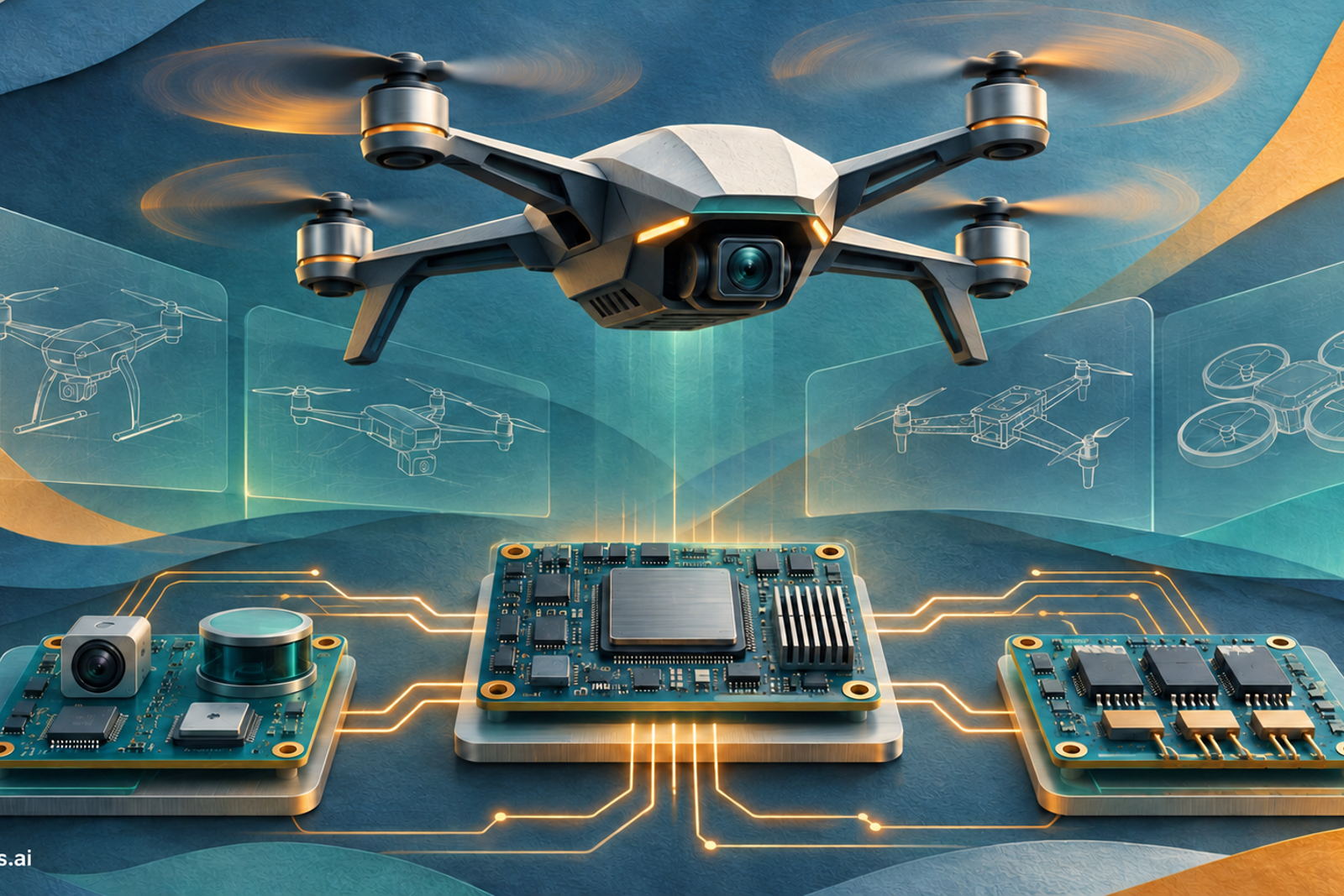
NXP introduced a robotics platform on November 9 that combines reference hardware and an open-source software development kit around its Neural Axis Architecture. The initial designs serve drones, with additional support for other autonomous systems expected in the second half of 2027. The drone designs and supporting SDK are available now, according to NXP’s announcement.
The pitch is aimed at the work between individual components: making sensing, AI processing, communications and motor control function together without repeatedly rebuilding the integration layer.
What is available today
The first hardware designs cover autonomous compute and flight control, flight management, sensor networking and electronic motor control. NXP names its NavQ95, Tropic VMU/FMU, 100Base-T1 Sensor Node and AM32-compatible speed-controller designs. It claims the kit can provide initial drone functionality within 30 minutes out of the box. Launch details
That is an initial-functionality claim, not a promise that a flight-ready commercial product can be engineered and validated in half an hour. Teams should separate the time to run a reference example from the effort required to adapt it to their own airframe, operating conditions and safety requirements.
The repository explains the SDK’s role
NXP’s public robotics-sdk repository describes the project as an integration layer. It pins compatible upstream revisions, sends builds to the appropriate build system and provides a way to download prebuilt artifacts. It does not contain a new firmware implementation of every supported function.
The repository identifies supported combinations of boards and software stacks, including PX4, Zephyr, Cerebri and AM32. The displayed license is Apache 2.0. Its documented Docker build flow is validated on Ubuntu 24.04 LTS and requires at least 25 GB of free space for Docker storage. SDK requirements and compatibility
Those details give developers a practical starting point: confirm the board-and-stack combination before treating the platform as interchangeable across all hardware. Pinning the upstream software can improve reproducibility, but teams still need to track the components they ship and their respective licenses.
A platform to evaluate in stages
The useful first test is whether a team can reproduce a supported example, change one subsystem and retain predictable behavior across the rest. Record integration time and regression failures rather than only the speed of the first demonstration.
NXP has supplied a concrete drone starting point. Service robots and other autonomous systems remain part of the expansion plan, so purchasing and development schedules should distinguish the current package from the later roadmap.
Sources and citations
Revision history
Published .